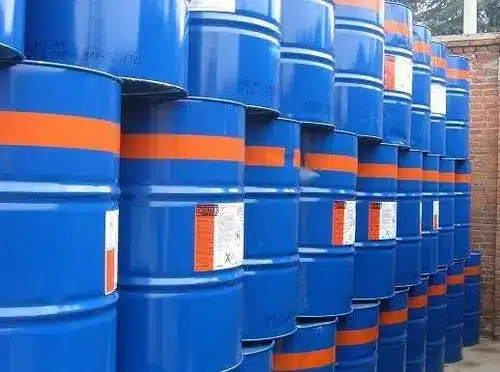
Learn about the benefits of PERC, how to handle it safely, and how it is used in a variety of industries and for various applications.
Perchloroethylene, commonly abbreviated as PERC or PCE, is a chlorinated hydrocarbon. It’s a colorless, nonflammable liquid used in a variety of industrial applications, most notably as a solvent in dry cleaning.
What is meant by Stabilised Perchloroethylene?
Stabilised perchloroethylene refers to a specific formulation of the chemical compound perchloroethylene, also known as tetrachloroethylene or “perc.” It is a colourless, volatile liquid commonly used as a solvent in various industrial and commercial applications, particularly in dry cleaning.
The term “stabilised” indicates that the perchloroethylene has undergone a process to enhance its stability and prevent decomposition or degradation. Stabilisation typically involves the addition of certain chemicals or inhibitors to the perchloroethylene to improve its performance and extend its shelf life.
The stabilisation process is important because perchloroethylene can undergo reactions or break down under certain conditions, leading to the formation of harmful byproducts. By stabilising perchloroethylene, these undesirable reactions can be minimized, ensuring its reliability and safety when used in applications such as dry cleaning.
Perc is also referred to as:
Tetrachloroethylene
Perchloroethene
PCE
Ethene tetrachloride
Tetrachloroethylene
Perchlor
PCE
Tetra
PERC